
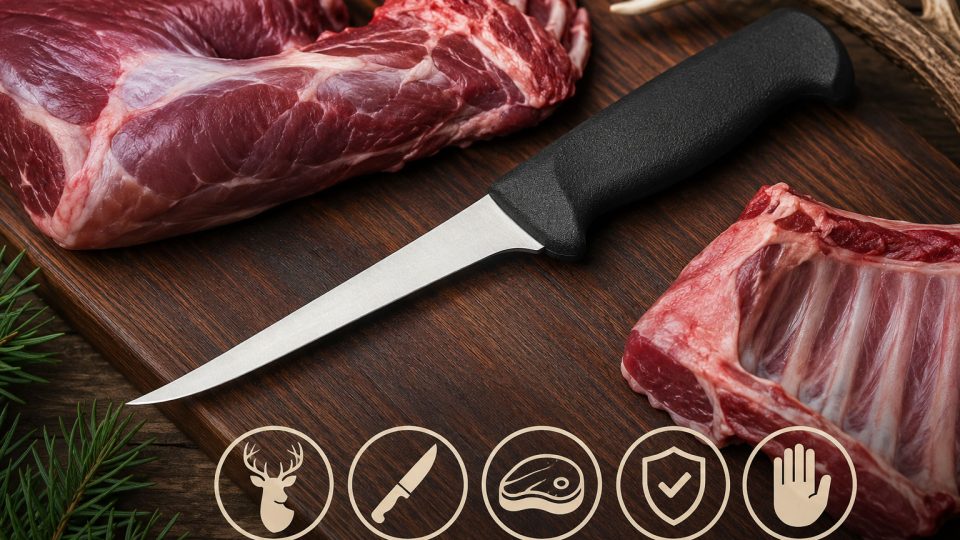
Best Boning Knife for Deer (2026): Complete Buyer’s Guide
Whether you’re an experienced hunter or processing your first deer, having the best boning knife for deer can make the entire job safer, cleaner, and significantly easier. A quality boning knife helps separate meat from bone with minimal waste while giving you the precision needed for trimming, deboning, and preparing venison for storage.
Many hunters spend hours tracking and harvesting a deer, but the quality of the meat often depends on what happens afterward. Using the wrong knife can tear muscle fibers, leave excess meat on the bone, and make processing more difficult than it needs to be. A purpose-built boning knife is designed to solve these problems with a narrow, sharp blade that follows the natural contours of the bones.
In this comprehensive guide, we’ll explain everything you need to know before buying a deer boning knife. You’ll learn which blade style works best, what features truly matter, and how to choose the right knife for your hunting style and budget.
Why You Need a Dedicated Boning Knife for Deer
While many hunting knives are versatile enough for field dressing, a boning knife is specifically engineered for precision meat processing. Its slim profile allows you to work close to bones without damaging valuable cuts.
A dedicated deer boning knife offers several important advantages:
- Reduces meat waste during deboning
- Provides cleaner, smoother cuts
- Makes trimming silver skin easier
- Improves safety through better control
- Speeds up meat processing
- Produces professional-quality venison cuts
Unlike heavier hunting knives, boning knives excel during the butchering stage when accuracy matters most.
What Makes the Best Boning Knife for Deer?
Not every boning knife performs equally well when processing wild game. The best options combine sharpness, durability, comfort, and ease of maintenance.
Here are the most important factors to consider.
Blade Flexibility
Blade flexibility directly affects how well the knife follows the shape of bones.
Flexible Blade
Flexible blades bend slightly while cutting, allowing precise trimming around ribs, shoulders, and hindquarters.
Best for:
- Removing silver skin
- Deboning delicate cuts
- Maximum meat recovery
Semi-Stiff Blade
Semi-stiff blades provide a balance between flexibility and control.
Ideal for:
- General deer processing
- Hunters who process multiple game animals
- Beginners seeking versatility
Stiff Blade
Stiff blades deliver more force and stability.
Best suited for:
- Thick muscle groups
- Larger game
- Heavy-duty butchering tasks
Blade Length
Most deer hunters prefer blades between 5 and 6 inches.
Shorter blades provide greater control, while longer blades allow smoother slicing through larger muscles.
General recommendations:
- 5 inches: Excellent precision
- 5.5 inches: Best all-around choice
- 6 inches: Faster processing for experienced users
Choosing the right blade length depends on your comfort level and processing style.
Blade Material
Steel quality determines how long your knife stays sharp and how well it resists corrosion.
Stainless Steel
Advantages:
- Rust resistant
- Easy maintenance
- Ideal for wet environments
- Great for beginners
High Carbon Steel
Advantages:
- Exceptional sharpness
- Easy to resharpen
- Excellent edge retention
Requires regular cleaning and drying to prevent rust.
High Carbon Stainless Steel
Many premium boning knives use high carbon stainless steel because it combines corrosion resistance with long-lasting sharpness, making it one of the best choices for frequent deer processing.
Handle Comfort and Grip
Processing a deer can take an hour or more depending on experience. A comfortable handle reduces fatigue and improves safety.
Look for handles that offer:
- Non-slip texture
- Ergonomic shape
- Moisture resistance
- Secure grip with gloves
- Easy cleaning
Popular handle materials include:
- Fibrox
- Rubber
- G10
- Polymer
- Pakkawood
- Micarta
Edge Retention Matters
A dull knife increases effort and raises the risk of accidents.
The best boning knives maintain a razor-sharp edge through multiple processing sessions.
Good edge retention means:
- Fewer sharpening interruptions
- Cleaner cuts
- Better efficiency
- Reduced meat damage
Hunters who process several deer each season should prioritize edge retention over initial sharpness alone.
Easy Maintenance
Wild game processing exposes knives to blood, fat, moisture, and connective tissue. A knife that’s easy to clean helps maintain hygiene and prolongs its lifespan.
Choose a knife that:
- Cleans easily
- Resists corrosion
- Holds its edge well
- Can be sharpened with common tools
- Stores safely in a protective sheath
Proper maintenance ensures your knife remains reliable season after season.
Fixed Blade vs Folding Boning Knife
Many hunters wonder whether a folding knife can replace a dedicated boning knife.
For serious deer processing, a fixed-blade boning knife is generally the better option.
Fixed Blade Advantages
- Stronger construction
- Easier to sanitize
- Better cutting control
- Longer lifespan
- More stable during heavy use
Folding Knife Advantages
- Compact
- Portable
- Convenient for travel
However, folding knives can trap moisture and tissue inside the pivot, making them less suitable for extended butchering tasks.
Choosing the Right Knife for Your Hunting Style
The ideal boning knife depends on how often you hunt and process deer.
Occasional Hunters
If you harvest one or two deer per season, prioritize:
- Stainless steel
- Comfortable grip
- Affordable price
- Easy sharpening
Experienced Hunters
Frequent hunters should consider:
- Premium steel
- Superior edge retention
- Ergonomic design
- High-quality sheath
- Long-term durability
Investing in a better knife often pays off through improved performance and reduced replacement costs.
A quality boning knife is one of the most valuable tools in a hunter’s kit. By understanding blade flexibility, steel types, handle materials, and maintenance requirements, you’ll be well prepared to choose a knife that delivers clean cuts and dependable performance for years to come.
Top 7 Best Boning Knives for Deer: Expert Reviews
Now that you know what features to look for, it’s time to compare some of the most trusted boning knives used by hunters and home processors. The knives below are well-known for their sharpness, durability, comfortable handling, and dependable performance when processing venison.
Note: The products below are listed based on overall performance, reputation, and suitability for deer processing—not as sponsored recommendations.
Quick Comparison Table
| Knife | Blade Length | Blade Type | Best For |
| Victorinox Fibrox Boning Knife | 6″ | Semi-Flexible | Best Overall |
| Dexter-Russell Sani-Safe | 6″ | Flexible | Best Value |
| Wüsthof Classic Boning Knife | 5″ | Stiff | Premium Choice |
| Mercer Culinary Millennia | 6″ | Flexible | Budget-Friendly |
| Outdoor Edge RazorPro | Replaceable | Flexible | Field Processing |
| Buck 225 Silver Creek | 6″ | Flexible | Hunting Trips |
| Opinel No.120 Boning Knife | 5.9″ | Flexible | Precision Cutting |
-
Victorinox Fibrox Boning Knife
Best Overall Deer Boning Knife
The Victorinox Fibrox has earned an excellent reputation among professional butchers, hunters, and home meat processors. Its razor-sharp blade and ergonomic Fibrox handle make it one of the easiest knives to control while separating meat from bone.
- Excellent edge retention
- Comfortable non-slip handle
- Lightweight and well-balanced
- Rust-resistant stainless steel
- Easy to sharpen
- Plain appearance
- Blade may feel flexible for users who prefer stiff knives
Best For: Hunters who want one reliable knife for processing multiple deer each season.
-
Dexter-Russell Sani-Safe
Best Value for Money
Dexter-Russell has been manufacturing professional butcher knives for decades. The Sani-Safe series offers outstanding cutting performance without a premium price tag.
Its flexible blade glides smoothly around joints, ribs, and connective tissue, helping maximize meat yield.
- Affordable
- Excellent flexibility
- Comfortable grip
- Trusted by professional meat processors
- Durable blade
- Basic design
- Requires occasional sharpening with heavy use
Best For: Budget-conscious hunters looking for professional performance.
-
Wüsthof Classic Boning Knife
Best Premium Boning Knife
If you’re willing to invest in premium craftsmanship, the Wüsthof Classic is an outstanding choice.
Forged from high-carbon stainless steel, it offers exceptional edge retention, precise balance, and excellent durability.
- Premium German steel
- Outstanding craftsmanship
- Extremely sharp edge
- Excellent balance
- Comfortable handle
- Higher price
- Slightly heavier than some competitors
Best For: Serious hunters and home butchers who value premium quality.
-
Mercer Culinary Millennia
Best Budget Option
The Mercer Millennia series delivers excellent value without sacrificing quality.
Its textured Santoprene handle remains secure even when wet, making it especially useful during long processing sessions.
- Affordable
- Comfortable grip
- Lightweight
- Sharp factory edge
- Easy maintenance
- Edge retention isn’t as long-lasting as premium models
Best For: Beginners and occasional deer hunters.
-
Outdoor Edge RazorPro
Best for Field Dressing and Boning
Unlike traditional boning knives, the Outdoor Edge RazorPro features replaceable razor-sharp blades.
This means you never need to stop and sharpen your knife while processing game in the field.
- Replaceable blades
- Extremely sharp
- Lightweight
- Compact
- Great for hunting trips
- Replacement blades add long-term cost
- Less suitable for heavy-duty butchering
Best For: Hunters who frequently process deer in remote locations.
-
Buck 225 Silver Creek
Best Hunting Companion
Buck has been a trusted name in hunting knives for generations.
The Silver Creek Boning Knife features a corrosion-resistant blade and an ergonomic rubberized handle that provides a secure grip in wet conditions.
- Reliable quality
- Excellent corrosion resistance
- Comfortable grip
- Good flexibility
- Easy cleaning
- Blade may require sharpening more frequently than premium options
Best For: Hunters looking for a dependable all-around knife.
-
Opinel No.120 Boning Knife
Best Precision Knife
Made in France, the Opinel No.120 is known for its excellent cutting precision.
Its slim blade makes trimming silver skin and removing meat from bones remarkably easy.
- Excellent precision
- Comfortable wooden handle
- High-quality stainless steel
- Lightweight
- Attractive design
- Wooden handle requires more maintenance
- Not ideal for heavy chopping
Best For: Precision trimming and home venison processing.
Which Knife Is Right for You?
Choosing the best boning knife depends on your experience level, hunting frequency, and budget.
Choose Victorinox Fibrox if:
- You want the best overall performance.
- You process deer every season.
- You value comfort and reliability.
Choose Dexter-Russell if:
- You’re looking for the best value.
- You want professional performance at a reasonable price.
Choose Wüsthof if:
- Premium quality matters most.
- You want exceptional edge retention.
- You’re willing to invest in a long-lasting knife.
Choose Mercer Millennia if:
- You’re buying your first boning knife.
- You need an affordable yet dependable option.
Choose Outdoor Edge RazorPro if:
- You process deer in the field.
- You prefer replaceable blades.
Choose Buck Silver Creek if:
- You want a trusted hunting brand.
- You need excellent corrosion resistance.
Choose Opinel No.120 if:
- Precision trimming is your priority.
- You appreciate traditional craftsmanship.
Buying Tips Before Making Your Final Decision
Before purchasing a boning knife, ask yourself these questions:
- How many deer do I process each year?
- Do I process meat at home or in the field?
- Do I prefer flexible or stiff blades?
- How much maintenance am I willing to perform?
- Is long-term durability more important than the initial purchase price?
Answering these questions will help you choose a knife that matches your specific needs instead of simply buying the most expensive model.
By selecting a high-quality boning knife that fits your hunting style, you’ll enjoy cleaner cuts, less meat waste, and a more efficient processing experience.
By choosing the right boning knife, you’ve already taken the first step toward producing cleaner, higher-quality venison. The next step is learning how to use and maintain your knife correctly so it performs reliably for many hunting seasons.
How to Bone a Deer with a Boning Knife
Once your deer has been field dressed and properly cooled, move it to a clean, well-lit workspace. Wear cut-resistant gloves if possible and keep your work surface sanitized.
Step 1: Remove the Front Shoulders
The front shoulders are not attached by bone, making them one of the easiest cuts to remove. Follow the natural muscle seams and use smooth slicing motions rather than excessive force.
Step 2: Separate the Hind Quarters
Cut carefully around the hip joint until it can be separated cleanly. A narrow boning knife helps you work close to the bone without wasting meat.
Step 3: Remove the Backstraps
The backstraps are among the most prized cuts of venison. Start near the backbone and let the tip of the knife follow the ribs in long, controlled strokes.
Step 4: Trim the Tenderloins
Tenderloins are located inside the body cavity beneath the spine. Because they are delicate, use gentle cuts and avoid pulling or tearing the meat.
Step 5: Debone Larger Cuts
Place each cut on a cutting board and work slowly along the bones. Let the knife do the work instead of forcing it. A sharp blade produces cleaner cuts and helps preserve the meat’s texture.
Tips for Cleaner Deer Processing
Professional meat processors follow a few simple practices that improve both safety and meat quality.
- Keep your knife razor sharp.
- Wipe the blade frequently during use.
- Remove silver skin before freezing.
- Trim away damaged tissue.
- Separate different cuts immediately.
- Keep venison cool throughout processing.
- Sanitize knives and cutting boards after use.
These habits can improve the appearance, flavor, and storage life of your venison.
How to Sharpen a Boning Knife
Even the best boning knife will eventually lose its edge. Regular maintenance keeps it performing at its best.
Honing
Use a honing rod before or after each processing session to realign the blade’s edge.
Sharpening Stone
When the knife no longer slices cleanly, sharpen it with a quality whetstone. Maintain a consistent angle and use light, even pressure.
Professional Sharpening
If you’re unsure about sharpening at home, consider having the knife professionally sharpened once or twice a year, especially if you process several deer each season.
Knife Cleaning and Storage Tips
Proper care extends the life of your knife and helps maintain food safety.
- Wash the knife by hand with warm water and mild soap.
- Dry it immediately after washing.
- Never leave the blade soaking in water.
- Store it in a knife block, protective sheath, or magnetic strip.
- Lightly oil carbon steel blades before long-term storage to reduce the risk of corrosion.
Avoid using a dishwasher unless the manufacturer specifically states that the knife is dishwasher safe. High heat and harsh detergents can damage both the blade and the handle.
Common Mistakes to Avoid
Many first-time deer processors make the same avoidable mistakes.
Using a Dull Knife
Avoid using a dull knife because it increases the risk of slipping and injury. Regular sharpening improves cutting performance and helps ensure a safer cooking experience.
Choosing the Wrong Blade
A heavy survival knife or chef’s knife isn’t designed for precise deboning. A dedicated boning knife provides better control and minimizes meat loss.
Rushing the Process
Take your time. Careful, deliberate cuts produce cleaner results and help you recover more usable meat.
Ignoring Knife Maintenance
Even premium knives need regular cleaning, honing, and sharpening. Proper care ensures consistent performance year after year.
Frequently Asked Questions
What is the best blade length for a deer boning knife?
A blade between 5 and 6 inches offers an excellent balance of control and efficiency, making it suitable for most deer processing tasks.
Should I choose a flexible or stiff boning knife?
A flexible blade is ideal for trimming around bones and removing silver skin, while a stiff blade provides added strength for thicker cuts. Many hunters prefer a semi-flexible blade because it offers versatility.
Can I use a fillet knife for deer?
Although a fillet knife can work in some situations, a boning knife is generally a better choice because it’s designed specifically for separating meat from bone and handling tougher connective tissue.
How often should I sharpen my boning knife?
The frequency depends on use. Hunters who process several deer each season should hone the blade regularly and sharpen it whenever cutting performance begins to decline.
Is stainless steel better than carbon steel?
Both materials have advantages. Stainless steel is easier to maintain and resists rust, while high-carbon steel often offers excellent edge retention and is easier to sharpen. High-carbon stainless steel combines many of the benefits of both.
Final Buying Advice
The best boning knife isn’t necessarily the most expensive one—it’s the one that matches your hunting style, processing habits, and comfort preferences.
If you process deer every season, investing in a high-quality knife can save time, reduce meat waste, and provide years of dependable performance.
For occasional hunters, a well-made mid-range boning knife with a comfortable grip and durable stainless steel blade will handle most processing tasks with ease.
Regardless of your choice, maintaining a sharp edge and following proper care practices will have the greatest impact on your results.
Final Verdict
A reliable boning knife is one of the most valuable tools for anyone who processes deer. The right knife improves precision, enhances safety, and helps you make the most of every harvest.
Among the options discussed, the Victorinox Fibrox Boning Knife stands out as an excellent all-around choice thanks to its balance of sharpness, comfort, durability, and value. Hunters seeking premium craftsmanship may prefer the Wüsthof Classic, while budget-conscious buyers will find dependable performance in models like the Dexter-Russell Sani-Safe or Mercer Culinary Millennia.
Choose the knife that best fits your needs, keep it properly maintained, and it will serve you well for many successful hunting seasons.

