
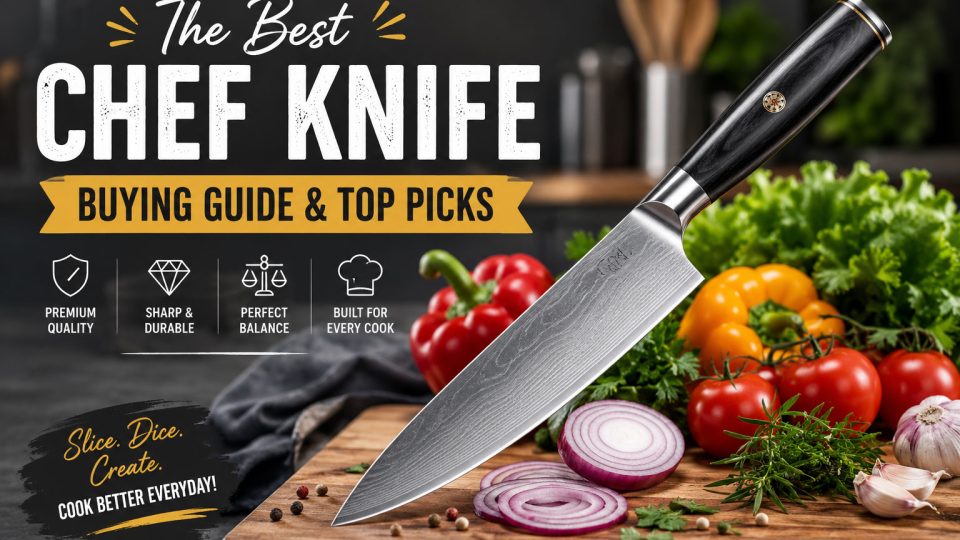
Best Chef Knife in 2026: Complete Buying Guide for Every Kitchen
A chef knife is one of the most important tools in any kitchen. Whether you’re slicing vegetables, chopping herbs, cutting meat, or preparing fruit, the best chef knife makes cooking easier, faster, and safer. Choosing the right knife can improve precision, reduce hand fatigue, and help you enjoy meal preparation.
With hundreds of options available, selecting the perfect chef knife can feel overwhelming. Blade materials, handle designs, weight, balance, and maintenance requirements all influence performance.
This guide explains everything you need to know before buying a chef knife, including the essential features, blade types, maintenance tips, and the differences between various styles. By the end, you’ll know exactly what to look for and how to choose the right knife for your cooking style.
Table of Contents
- What Is a Chef Knife?
- Why Every Kitchen Needs a Chef Knife
- Features of the Best Chef Knife
- Different Types of Chef Knives
- Blade Materials Explained
- Choosing the Right Blade Length
- Handle Materials
- How to Maintain a Chef Knife
- Common Buying Mistakes
- Frequently Asked Questions
- Final Thoughts
What Is a Chef Knife?
A chef knife is an all-purpose kitchen knife designed for handling a wide range of food preparation tasks. It usually features a broad blade with a gently curved edge, allowing the user to rock the knife smoothly while chopping.
Unlike specialty knives that are designed for only one purpose, a chef knife can handle many everyday kitchen jobs, including:
- Chopping vegetables
- Slicing fruits
- Cutting meat
- Mincing garlic
- Dicing onions
- Cutting herbs
- Preparing fish
- Portioning cooked meat
Because of its versatility, many professional chefs rely on a single high-quality chef knife for most daily cooking tasks.
Why Every Kitchen Needs the Best Chef Knife
Many people purchase inexpensive knife sets but end up using only one knife most of the time. That’s because a quality chef knife can replace several specialized knives for everyday cooking.
Some key benefits include:
Faster Food Preparation
A sharp blade glides through ingredients with minimal effort, saving time and making cooking more enjoyable.
Better Precision
A well-balanced chef knife offers excellent control, helping you create consistent slices and evenly chopped ingredients.
Improved Safety
A sharp knife is generally safer than a dull one because it requires less force. Less pressure means a lower chance of slipping while cutting.
Long-Term Value
A quality chef knife can last for many years with proper care. Instead of frequently replacing inexpensive knives, investing in a durable option often saves money over time.
Features of the Best Chef Knife
Not every chef knife performs the same. Understanding the following features will help you make an informed decision.
-
Blade Material
The blade material significantly affects sharpness, durability, corrosion resistance, and maintenance.
Common options include:
Stainless Steel
- Rust resistant
- Easy to maintain
- Affordable
- Great for beginners
High Carbon Stainless Steel
Many premium chef knives use high-carbon stainless steel because it combines excellent edge retention with corrosion resistance.
Benefits include:
- Longer-lasting sharpness
- Better durability
- Easier maintenance than traditional carbon steel
Carbon Steel
Carbon steel blades become extremely sharp and are favored by many professionals. However, they require regular drying and oiling to prevent rust.
-
Blade Sharpness
One of the defining characteristics of the best chef knives is exceptional sharpness.
A sharp blade:
- Produces cleaner cuts
- Protects delicate foods
- Requires less effort
- Makes cooking safer
Many premium knives arrive razor sharp and only require occasional maintenance using a honing rod and periodic sharpening.
-
Blade Thickness
Blade thickness influences cutting performance.
Thin blades:
- Excellent for vegetables
- Produce cleaner slices
- Require less effort
Thicker blades:
- More durable
- Better for harder ingredients
- Slightly heavier
Most home cooks prefer a balanced blade that performs well in multiple situations.
-
Weight and Balance
Some people prefer lightweight knives, while others enjoy the stability of heavier models.
The ideal knife should feel balanced between the blade and handle. Proper balance reduces wrist fatigue during extended cooking sessions.
If possible, hold a knife before purchasing to determine which weight feels most comfortable for your hand.
Different Types of Chef Knives
Understanding the different styles can help narrow your choices.
German Chef Knife
German-style knives are known for:
- Thick blades
- Strong durability
- Slightly heavier construction
- Excellent versatility
These knives are well suited for chopping tougher ingredients.
Japanese Chef Knife
Japanese chef knives typically feature:
- Thinner blades
- Exceptional sharpness
- Lightweight feel
- Highly precise cutting
They excel at slicing vegetables, fish, and boneless meats with precision.
Hybrid Chef Knife
Many modern manufacturers combine the strengths of German and Japanese designs to create hybrid chef knives.
These models often provide:
- Good durability
- Excellent sharpness
- Comfortable balance
- Easy maintenance
Hybrid knives are a practical option for home cooks who want versatility.
Blade Length: Which Size Is Best?
Chef knives are available in several blade lengths.
6-Inch Chef Knife
Ideal for:
- Small kitchens
- Beginners
- Light food preparation
- Smaller hands
8-Inch Chef Knife
The most popular size because it offers an excellent balance of control, versatility, and cutting power.
For most home cooks, an 8-inch chef knife is the best all-around choice.
10-Inch Chef Knife
Preferred by experienced cooks who prepare large quantities of food.
Advantages include:
- Longer slicing strokes
- Efficient cutting
- Better for large vegetables and roasts
However, these knives require more storage space and experience to handle comfortably.
Handle Materials Explained
The handle contributes significantly to comfort and safety.
Wooden Handles
Advantages:
- Beautiful appearance
- Comfortable grip
- Traditional feel
Considerations:
- Require occasional maintenance
- Should not remain wet for long periods
Plastic Handles
Benefits:
- Affordable
- Waterproof
- Easy to clean
- Low maintenance
These are common on everyday kitchen knives.
Composite Handles
Composite materials combine durability with comfort.
Advantages include:
- Moisture resistance
- Long lifespan
- Comfortable grip
- Attractive finish
Many premium chef knives feature composite handles because they offer an excellent balance between durability and appearance.
How to Choose the Best Chef Knife
Buying a chef knife isn’t about choosing the most expensive model. The right knife depends on your cooking habits, comfort, and maintenance preferences.
Consider Your Cooking Style
Think about the foods you prepare most often.
- If you cook vegetables every day, choose a lightweight knife with excellent precision.
- If you frequently prepare meat, a slightly heavier chef knife provides more cutting power.
- If you do a mix of both, an 8-inch all-purpose chef knife is the most versatile option.
The ideal chef knife is the one that feels natural in your hand and matches your daily cooking routine.
Choose the Right Blade Material
The blade material affects sharpness, durability, and maintenance.
| Material | Pros | Cons |
| Stainless Steel | Rust-resistant, easy to maintain | Edge may dull sooner |
| High-Carbon Stainless Steel | Excellent edge retention, corrosion resistant | Slightly higher price |
| Carbon Steel | Extremely sharp, easy to sharpen | Can rust without proper care |
For most home cooks, high-carbon stainless steel offers the best balance of performance and maintenance.
Check the Handle Comfort
A comfortable handle improves safety and reduces fatigue.
When holding a chef knife, make sure:
- It doesn’t slip in your hand.
- The grip feels secure.
- The handle isn’t too thick or too thin.
- Your fingers naturally wrap around it.
A comfortable knife is easier to control during long cooking sessions.
Look for Good Balance
Balance is often overlooked but makes a significant difference.
A well-balanced knife:
- Feels lighter during use
- Improves cutting accuracy
- Reduces wrist strain
- Increases control
Many experienced cooks consider balance just as important as sharpness.
Think About Maintenance
Every knife requires some level of maintenance.
Ask yourself:
- Are you willing to sharpen it regularly?
- Do you want a low-maintenance option?
- Will you hand wash the knife after every use?
If you prefer minimal maintenance, stainless steel or high-carbon stainless steel is usually the best choice.
Common Mistakes When Buying a Chef Knife
Many buyers focus only on price or appearance. Avoid these common mistakes.
Buying the Cheapest Knife
Low-cost knives often lose their edge quickly and may not offer good balance or durability.
Investing in a quality chef knife can save money over time because it lasts much longer.
Choosing the Wrong Size
A large knife isn’t always better.
Most home cooks are happiest with an 8-inch chef knife, which provides an excellent combination of versatility and control.
Ignoring Handle Comfort
Even the sharpest blade won’t feel right if the handle is uncomfortable.
Always choose a knife that feels secure and balanced in your hand.
Forgetting Maintenance
No chef knife stays sharp forever.
Regular honing and occasional sharpening keep your knife performing at its best.
How to Maintain Your Chef Knife
Proper care extends the life of your knife and ensures safe, efficient cutting.
Wash by Hand
Avoid putting your chef knife in the dishwasher.
Instead:
- Wash with warm water and mild soap.
- Dry immediately with a soft towel.
- Store only when completely dry.
Dishwashers can damage both the blade and the handle.
Hone the Blade Regularly
Honing doesn’t sharpen the blade—it realigns the cutting edge.
Using a honing rod every few cooking sessions helps maintain cutting performance.
Sharpen When Needed
Even the chef knife eventually becomes dull.
Depending on usage, sharpen your knife every few months using:
- A whetstone
- A quality knife sharpener
- Professional sharpening services
A sharp knife is safer and performs better than a dull one.
Store It Properly
Proper storage protects both the blade and your hands.
Good storage options include:
- Magnetic knife strips
- Knife blocks
- Blade guards
- Drawer organizers designed for knives
Avoid tossing knives loosely into a drawer, where they can become damaged and pose a safety risk.
Frequently Asked Questions
What is the best size for a chef knife?
For most home cooks, an 8-inch chef knife is the ideal size because it balances versatility, control, and cutting power.
What blade material is best?
High-carbon stainless steel is often considered the best choice because it combines excellent sharpness, durability, and corrosion resistance.
How often should I sharpen my chef knife?
This depends on how frequently you cook. Most home cooks benefit from sharpening every three to six months and honing the blade regularly between sharpenings.
Can one chef knife replace other kitchen knives?
A chef knife can handle many everyday tasks, including chopping vegetables, slicing meat, dicing onions, and mincing herbs. However, specialty knives such as paring or bread knives are still useful for specific jobs.
Is an expensive chef knife worth it?
A higher-quality chef knife generally offers better steel, improved balance, and a longer-lasting edge. With proper care, it can provide years of reliable performance, making it a worthwhile investment for many home cooks.
Final Thoughts
Choosing the best chef knife is about finding the right combination of comfort, blade quality, balance, and durability for your cooking style.
Whether you’re preparing quick weekday meals or experimenting with new recipes, a reliable chef knife makes food preparation easier, safer, and more enjoyable. Rather than focusing only on price, consider how the knife feels in your hand, the type of steel used, and the level of maintenance you’re comfortable with.
A well-made chef knife can serve as the foundation of your kitchen for many years. By selecting the right size, caring for it properly, and keeping it sharp, you’ll enjoy better cutting performance and greater confidence every time you cook.

